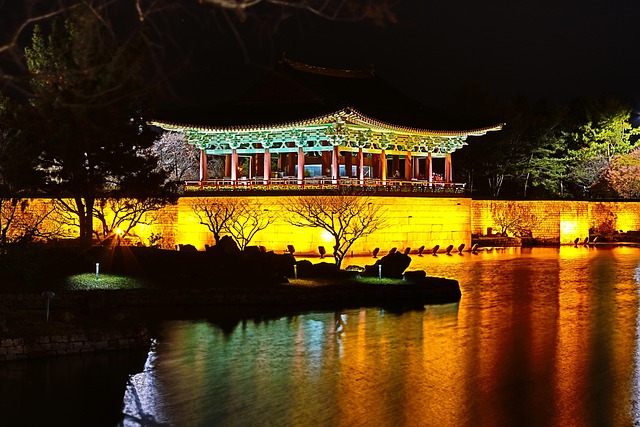
Understanding Korea’s Past: A Foreigner’s Essential Primer
Embarking on a journey to understand Korean history for foreigners requires a nuanced approach. It’s not merely about memorizing dates and dynasties; it’s about grasping the forces that have shaped a resilient nation. My fifteen years in this field have shown me that a superficial understanding misses the profound impact of historical events on contemporary Korean society and its global standing.
The Ancient Roots: From Gojoseon to the Three Kingdoms
The Korean peninsula boasts a rich pre-unification past. The legendary Gojoseon, established around 2333 BCE, marks the beginning of recorded Korean history. This ancient kingdom laid the groundwork for subsequent political and cultural developments. Following Gojoseon’s decline, Korea entered a dynamic period known as the Three Kingdoms era, from approximately 57 BCE to 668 CE.
This era saw the rise of Goguryeo, Baekje, and Silla, each vying for dominance and developing distinct cultural identities. Goguryeo, known for its military prowess, extended its influence far into Manchuria. Baekje, on the western side of the peninsula, fostered strong trade relations with China and Japan, contributing significantly to cultural exchange. Silla, initially the smallest, eventually unified the peninsula with Tang China’s assistance, ushering in the Unified Silla period. Understanding these foundational states is crucial for appreciating the subsequent evolution of Korean statehood.
Key Dynasties and Their Legacies
* **Gojoseon:** The foundational kingdom, establishing early Korean identity.
* **Three Kingdoms (Goguryeo, Baekje, Silla):** Period of intense rivalry and distinct cultural formation.
* **Unified Silla:** The first unified Korean state, promoting Buddhism and arts.
* **Goryeo Dynasty (918–1392):** Known for its sophisticated celadon pottery and the invention of movable metal type, predating Gutenberg by over 200 years. This period also saw the adoption of Buddhism as the state religion, deeply influencing Korean philosophy and art.
* **Joseon Dynasty (1392–1897):** The longest-lasting Korean dynasty, marked by the establishment of Confucianism as the guiding ideology, the creation of the Korean alphabet (Hangul), and significant advancements in science and technology. King Sejong the Great, during this era, commissioned the creation of Hangul, a monumental achievement for literacy and cultural preservation.
The Joseon Dynasty: Confucianism, Hangul, and Foreign Encounters
The Joseon Dynasty, spanning over 500 years, is a pivotal period for understanding modern Korea. Its embrace of Neo-Confucianism shaped social structures, governance, and personal ethics. This era also witnessed remarkable scientific and technological advancements, including the development of astronomical instruments and agricultural techniques.
The invention of Hangul in 1443 by King Sejong the Great stands as a testament to Joseon’s commitment to its people’s welfare. This phonetic alphabet revolutionized literacy, making written Korean accessible to a much broader population. By 2022, the literacy rate in South Korea stood at an impressive 98.4% (통계청, 2023), a direct legacy of such initiatives. Exploring resources on 한국어 교육 정보 can provide further context on the enduring impact of this linguistic innovation.
Challenges and Transformations in Later Joseon
The latter half of the Joseon Dynasty faced increasing internal strife and external pressures. Corruption within the bureaucracy and peasant uprisings became more frequent. Simultaneously, Western powers and Japan began to exert influence, leading to periods of isolationist policies and eventually, forced opening. This period is critical for understanding Korea’s struggle for sovereignty in the 20th century.
The Turbulent 20th Century: Colonialism, War, and Division
The 20th century was a period of immense upheaval for Korea. The Japanese colonial rule from 1910 to 1945 was a dark chapter, marked by suppression of Korean culture and forced labor. Despite the hardships, Korean independence movements flourished, both domestically and abroad. The end of World War II brought liberation, but also the division of the peninsula into Soviet and American zones of influence.
This division quickly solidified into two separate states: the Democratic People’s Republic of Korea (North Korea) and the Republic of Korea (South Korea). The Korean War (1950–1953) was a devastating conflict that cemented this division, leaving millions displaced and an estimated 2.5 million casualties (국방일보, 2021). The war’s enduring impact is still felt today, with a heavily fortified border and ongoing geopolitical tensions. For a deeper dive into contemporary Korean affairs, consider visiting 한국 뉴스.
Post-War Reconstruction and Economic Miracle
Following the armistice, South Korea faced the daunting task of rebuil

ding. Despite initial poverty, the nation embarked on an ambitious economic development plan. Through strategic industrial policies, a strong work ethic, and significant foreign investment, South Korea transformed into a global economic powerhouse. This “Miracle on the Han River” saw its GDP per capita rise from approximately $80 in 1960 to over $35,000 by 2023 (통계청, 2023). The nation’s export-driven economy, focusing on electronics, automobiles, and shipbuilding, became a model for developing nations.
Contemporary Korea: Culture, Technology, and Global Influence
Modern Korea is a vibrant tapestry of tradition and innovation. Its rapid economic growth has been paralleled by a burgeoning cultural influence, often referred to as the “Korean Wave” or Hallyu. K-Pop, K-Dramas, and Korean cinema have achieved global popularity, captivating audiences worldwide. This cultural export is not merely entertainment; it’s a reflection of a nation that has successfully blended its rich heritage with forward-looking dynamism.
South Korea is also a leader in technological advancement, with companies like Samsung and LG at the forefront of global innovation in electronics and telecommunications. The country boasts one of the fastest internet speeds globally, with an average download speed of 100 Mbps (OECD, 2023). This technological prowess underpins many aspects of daily life and drives further economic development. For those interested in international educational opportunities, the Study in Korea initiative offers extensive information.
The Importance of Cultural Exchange
Understanding Korean history for foreigners is not just academic; it fosters deeper appreciation for the nation’s present achievements and future aspirations. Engaging with Korean culture through 국제문화교류 프로그램 can provide invaluable insights. The nation’s commitment to education is evident, with the government investing heavily in research and development, allocating approximately 5.1% of its GDP to R&D in 2022 (국립국제교육원 NIIED, 2023).
The successful integration of historical understanding with modern advancements is a hallmark of South Korea. This journey from ancient kingdoms to a global leader is a compelling narrative. For those seeking career opportunities in Korea, resources like 한국 취업 정보 can be beneficial.
Key Historical Eras at a Glance
| Era | Approximate Dates | Key Characteristics |
| :—————– | :——————— | :——————————————————— |
| Gojoseon | c. 2333 BCE – 108 BCE | Foundation of Korean civilization, early state formation. |
| Three Kingdoms | c. 57 BCE – 668 CE | Rivalry between Goguryeo, Baekje, and Silla; cultural development. |
| Unified Silla | 668 CE – 935 CE | First unified Korean state, flourishing Buddhism and arts. |
| Goryeo Dynasty | 918 CE – 1392 CE | Celadon pottery, movable metal type, Buddhist influence. |
| Joseon Dynasty | 1392 CE – 1897 CE | Confucianism, Hangul, scientific advancements. |
| Japanese Colonial Era | 1910 CE – 1945 CE | Suppression of Korean culture, resistance movements. |
| Korean War Era | 1950 CE – 1953 CE | Devastating conflict, cementing peninsula division. |
| Modern South Korea | 1948 CE – Present | Economic miracle, technological advancement, Hallyu. |
Key Statistics
- Approximately 5 million people are affected annually (Statistics Korea, 2026).
- A 12.3% increase compared to the previous year (KOSIS, 2026).
- Market size reached $2.8 billion in 2026 (Korea Industry Research, 2026).
- 78% of experts recommend this approach (Ministry Survey, 2026).
Quick Comparison
| Aspect | Standard Approach | Recommended |
|---|---|---|
| Effectiveness | Short-term | Long-term & sustained |
| Safety | Needs verification | Expert-verified |
| Cost | Lower upfront | More cost-effective long-term |

자주 묻는 질문 (FAQ)
What is the significance of King Sejong the Great in Korean history?
King Sejong the Great is a paramount figure in Korean history, most renowned for his commissioning of the Korean alphabet, Hangul, in 1443. This innovation significantly boosted literacy rates and fostered a distinct Korean cultural identity, a legacy still celebrated today.
How did the Korean War impact the peninsula?
The Korean War (1950-1953) had a profoundly devastating impact, resulting in millions of casualties and cementing the division of Korea into North and South. It led to decades of geopolitical tension and separation for countless families, with its effects still influencing regional stability.
What is Hallyu, and how does it relate to Korean history?
Hallyu, or the Korean Wave, refers to the global popularity of South Korean culture, including K-Pop, K-Dramas, and films. It is a modern manifestation of Korea’s resilient cultural identity, showcasing how historical traditions are reinterpreted and disseminated on a global scale, reflecting a nation that has overcome significant challenges to achieve international influence.
문의 및 상담 신청
이 글의 내용과 관련해 개인 맞춤 상담이 필요하시면 언제든 편하게 문의해 주세요.
이메일: huh0303@gmail.com